Ask most people to name a type of blind and you will hear roller, Roman, Venetian and perhaps vertical. Very few will say cellular. Yet if you walked into our showroom in October and asked which blind would make the biggest difference to a cold room this winter, cellular pleated blinds are the ones we would show you first.
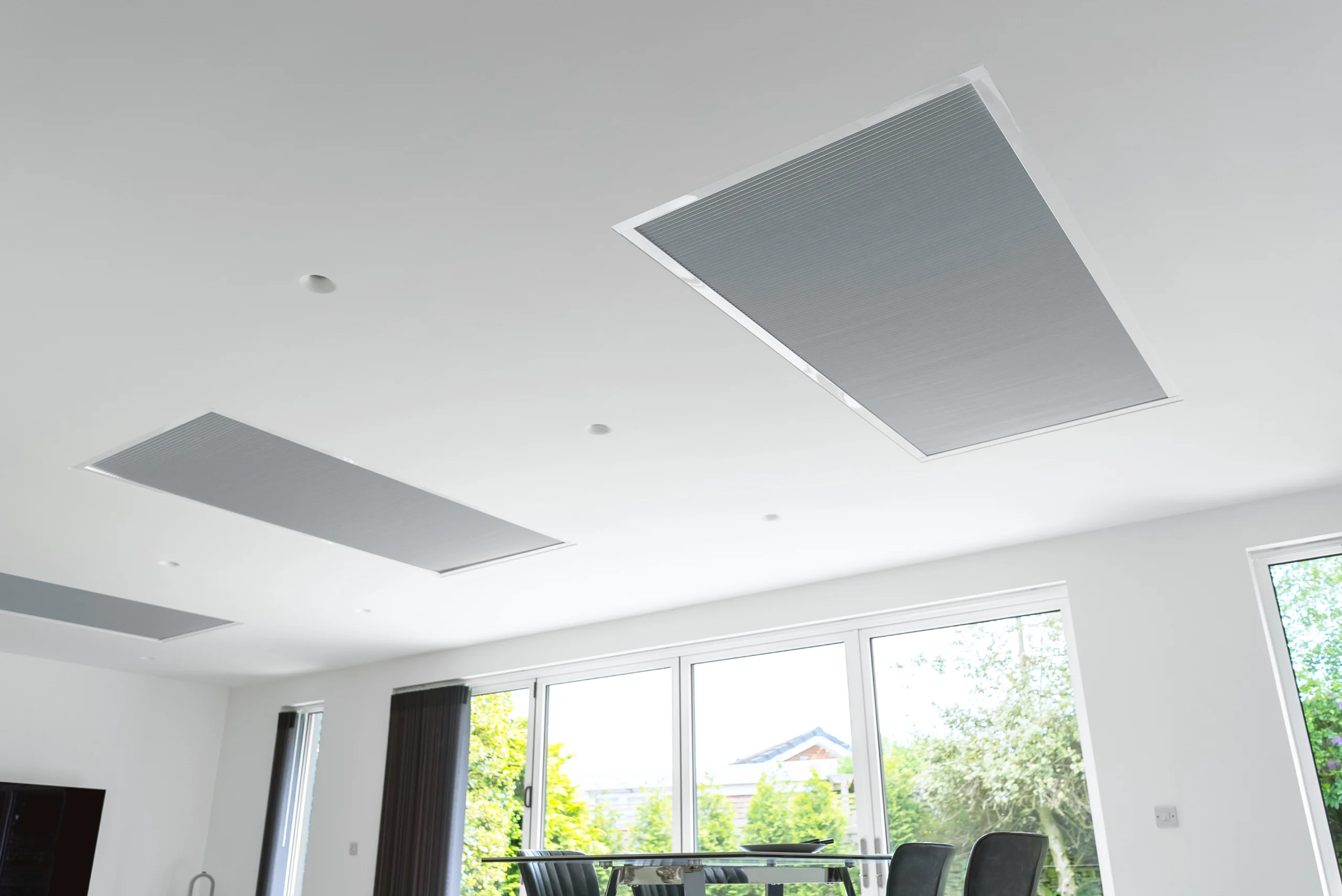
They go by a few names: cellular blinds, honeycomb blinds, thermal pleated blinds. Whatever you call them, they are the only everyday blind designed from the ground up to hold warmth in. With the heating back on across Bolton, Wigan and Chorley and energy bills still a sore subject, this guide explains how they work, what they can realistically save you, and where in the home they earn their keep.
What Is a Cellular Pleated Blind?
Look at a standard pleated blind side-on and you see a zigzag of single-layer fabric. Look at a cellular pleated blind side-on and you see a row of hexagonal pockets, like a slice through a honeycomb. Two layers of pleated fabric are bonded together so that every pleat forms a sealed cell running the full width of the blind.
From the front it looks like a crisp, neat pleated blind. The clever part is hidden inside those cells, and it is nothing more exotic than air.

Why a Pocket of Air Keeps a Room Warmer
Glass is a poor insulator. On a cold night a window loses heat far faster than the wall around it, and the warm air in the room cools as it touches the pane, sinks, and pulls more warm air in behind it. That is the draught you feel sitting near a window even when it is firmly shut.
Still air, on the other hand, is one of the best insulators there is. It is the principle behind double glazing, loft insulation and a down jacket: trap air so it cannot move, and heat struggles to pass through it. A cellular blind does exactly that at the window. Each honeycomb cell holds a column of still air between the cold glass and the warm room, so the pane cools the room far more slowly. A single-layer roller or Roman blind helps a little by breaking the draught, but it has no trapped layer to work with.
The same physics works in reverse in summer. The air pocket slows the heat coming in through sun-facing glass, which is why cellular blinds are so popular in conservatories and south-facing bedrooms that overheat in July.

How Much Can Cellular Blinds Actually Save?
We are careful with numbers because every house is different. The figures in our energy saving guide give a sensible starting point: a well-fitted blind or shutter can cut heat loss through a window by up to 40 per cent, which for a typical household works out at roughly £70 saved for every £1,000 spent on heating. Those figures apply to window coverings in general. Because a cellular blind adds a trapped-air layer that a flat fabric does not have, it sits at the top end of what a blind can do. Three things make a real difference to what you save.
A blind that stops short of the recess edges lets warm air slip round the sides. Made-to-measure fitting, or a frame-mounted Perfect Fit system, closes those gaps.
Closing the blinds as soon as it gets dark and opening them on bright winter days to let the sun in costs nothing and roughly doubles the benefit.
The older and thinner the glass, the bigger the gain. Homes with single glazing or early double glazing notice the change most.
Put simply, a cellular blind will not replace insulation in the loft, but on a cold window it is the most effective thing you can hang, and unlike most energy upgrades you also get to enjoy looking at it.
Cellular Blinds Compared with Roller and Roman Blinds
This is the question we are asked most, so here is an honest answer. Roller blinds are the practical workhorse: simple, affordable and available in hundreds of fabrics, with blackout and moisture-resistant options. Roman blinds bring softness and a furnished look that nothing else matches. Both will reduce draughts and both can be made in thermal-lined fabrics, but neither has the sealed cells that make the honeycomb design so good at holding heat.
Cellular blinds, by contrast, are built for insulation first and look second, although the second part is better than most people expect. They come in sheer, dim-out and full blackout fabrics, in soft neutrals and bolder colours, and they stack into a very slim bundle at the top of the window so you lose almost none of the view when they are open.
Many of our customers mix and match. A home with roller blinds in Wigan or Bolton that are a few years old will often keep them in the kitchen and living room, where they still do a fine job, and switch to cellular in the two or three rooms that are hardest to keep warm. That is usually the smartest use of the budget.
Where Cellular Pleated Blinds Work Best
Mostly glass, freezing in January and baking in July. Cellular blinds are the single biggest improvement you can make to a conservatory you want to use all year, and shaped versions are made for roof panels too.
A blackout cellular fabric gives you a dark room and a warm one. Parents who read our guide to blackout blinds for children’s bedrooms in August often come back for cellular once the nights draw in.
Big panes of glass lose a lot of heat. Cellular blinds mounted in the frame or across the top of the opening take the chill off a kitchen extension without blocking the way outside.
Small rooms with one cold window and someone sitting still at a desk all day. The difference is noticeable within an afternoon.
Heat rises straight out through roof glass. Tensioned cellular blinds are made for skylights and roof lanterns, and they are a favourite in loft conversions.

Fitting Options, Including No-Drill Perfect Fit
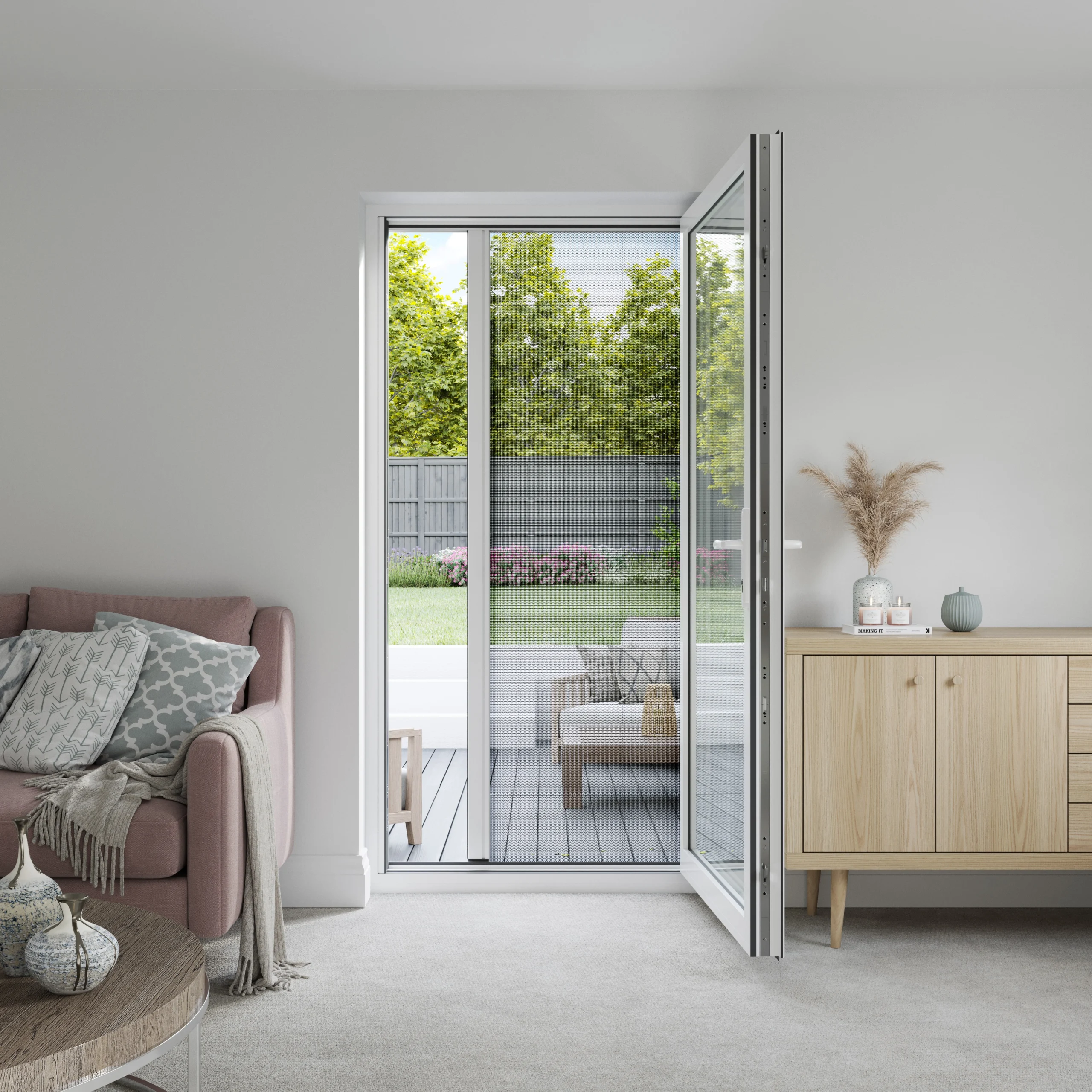
Cellular blinds can be fitted in the recess or on the face of the wall like any other blind, with a cord and child safety device as standard. The option that makes the most sense for insulation, though, is the Perfect Fit frame. The blind sits in a slim frame that clips directly onto the beading of a uPVC window or door, with no screws and no holes. Because the frame sits flush against the glass, the air pocket is sealed on all four sides, which is exactly what you want from a thermal blind. It also moves with the window, so it never catches on a tilt-and-turn opener or a door handle.
Cellular fabrics can be motorised and run on a schedule, closing automatically at dusk when the heat loss starts. That takes the “habit” part of the savings out of your hands entirely. Our smart home blinds guide explains how the scheduling works.
Why October Is the Right Time to Order
Made-to-measure blinds take around two weeks from measure to fitting. Order in October and your cellular blinds are up before the first proper cold snap, so you get the full winter’s worth of savings rather than half of it. It also means the measuring visit happens while the evenings are still light enough to see which rooms lose their heat first.
Every cellular pleated blind we fit is made for your exact window, measured and installed free by our own team across Bolton, Wigan, Chorley and Southport, and covered by our 3 year guarantee. You can spread the cost with Klarna if that helps the budget stretch further before Christmas.
Frequently Asked Questions
Are cellular blinds the same as pleated blinds?
Not quite. A standard pleated blind is a single layer of folded fabric. A cellular blind bonds two pleated layers into honeycomb cells that trap air. They look similar from the front, but only the cellular version gives you the insulating benefit.
Do honeycomb blinds really make a difference to heating bills?
Yes, particularly on older glazing and in rooms with a lot of glass. The trapped air in each cell slows heat loss through the window in a way a flat fabric cannot. The saving depends on your home and how consistently you close the blinds at night, so we give realistic guidance rather than a promise at the home visit.
Can I get blackout cellular blinds?
Yes. Cellular fabrics come in sheer, dim-out and blockout, so you can have a bedroom blind that keeps the room dark and warm at the same time. Fitting it in a Perfect Fit frame closes the light gaps at the edges as well.
Will cellular blinds fit my conservatory roof?
Shaped and tensioned cellular blinds are made for conservatory roofs, roof lanterns and skylights. They are measured on site because roof panels are rarely a perfect rectangle. Book a free visit and we will tell you what is possible.
How long does it take to get cellular blinds fitted?
Most orders are measured, made and fitted within around two weeks. Measuring and fitting are free, and you receive a fixed written price before anything is made.
Request your free home visit
Bespoke Blinds has been measuring, making and fitting blinds across Bolton, Wigan, Chorley and Southport for more than 30 years. We will bring cellular fabric samples to your home, measure every window and give you a fixed price with no obligation. Measuring and fitting are free and every blind carries a 3 year guarantee. Prefer to talk it through? Call us on 01204 232112.